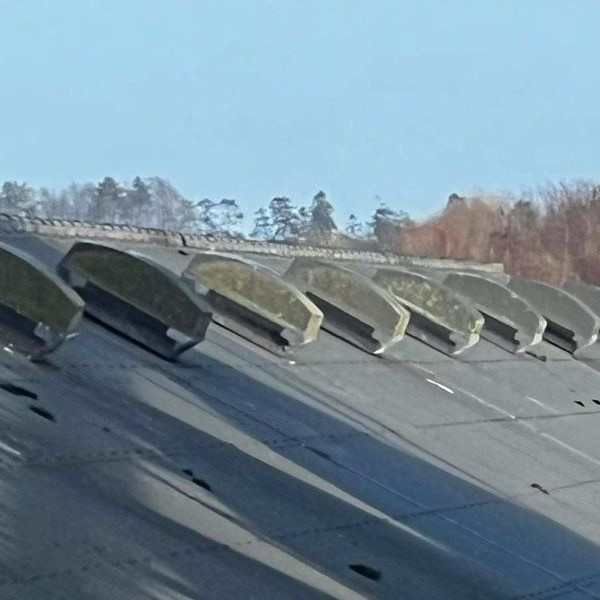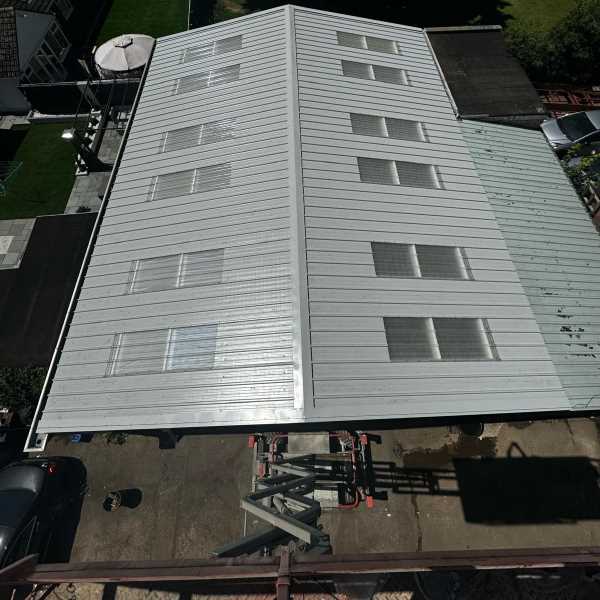
What to do when an otherwise sound corrugated asbestos roof starts leaking
Leaking Asbestos Barn Roof Repairs are often needed when an older agricultural building is still structurally useful, but the roof has started to fail in small but frustrating ways. If you have a barn roof clad in corrugated asbestos cement sheets, with corrugated plastic rooflight panels between them, and water is now coming in at several points, it does not always mean the whole roof has reached the end of its life. In many cases, a careful inspection can identify whether the leaks are coming from fixings, laps, cracked sheets, rooflights, flashings or gutters. JTC Roofing & Cladding provides practical roof repair and restoration services for agricultural, commercial and industrial buildings where a sensible repair may be more appropriate than a full replacement.
A leaking asbestos barn roof can feel like a big problem, especially when the rest of the structure appears sound. It is common for older corrugated asbestos cement roofs to develop leaks around the more vulnerable parts of the roof rather than across the whole surface. The plastic rooflight panels may have become brittle. Fixings may have loosened over time. The seals around overlaps may have failed. Wind, rain, temperature changes and general weathering can all expose small weaknesses that eventually allow water into the building.
The important point is that asbestos cement roofing should never be treated like an ordinary roof sheet. Even when the roof looks solid from the ground, it may be fragile. Older fibre cement sheets, asbestos cement sheets and rooflights can break without warning if walked on. That is why any inspection or repair work should be planned by people with the right experience, equipment and safety procedures.
For a barn owner, farmer, facilities manager or commercial property owner, the first question is usually simple: can the leaks be fixed without replacing the whole roof? The honest answer is that it depends on the condition of the roof, the number of leaks, the type of asbestos-containing material, access requirements and whether the roof can be repaired safely without causing further damage. A site inspection is the best starting point.
Why asbestos barn roofs start leaking
Corrugated asbestos cement roofs were widely used on agricultural and industrial buildings because they were strong, weather-resistant and relatively economical at the time. Many of these roofs have lasted for decades, but even a well-built roof will eventually begin to show signs of age.
Leaks may appear where old fixings have corroded or pulled away from the sheets. Overlaps between sheets can allow rain to creep in, especially during heavy wind-driven rain. Plastic rooflights are another common weak point because they weather differently from the surrounding sheets. Over time, they can become discoloured, brittle, cracked or poorly sealed.
Flashings around edges, ridges, abutments and gutters can also be responsible. Sometimes the roof sheets themselves are not the main problem at all. Blocked or damaged gutters can cause water to back up and find its way inside. Poor drainage can make a small defect look much worse than it is.
This is why a proper roof assessment matters. Guesswork often leads to short-term patching that does not solve the underlying issue. A professional inspection looks at the roof as a whole system, including sheets, fixings, rooflights, ridges, flashings, gutters and internal signs of water tracking.
Can a leaking asbestos roof be repaired?
In some cases, yes. If the roof is generally sound and the leaks are localised, targeted repair work may be possible. This could include replacing damaged rooflight panels, resealing specific areas, addressing failed fixings, repairing flashings or carrying out controlled work to damaged asbestos cement sections where appropriate.
However, repair is not always the right answer. If the roof is extensively weathered, badly cracked, heavily contaminated with moss, unsafe to access or leaking across many areas, overcladding or replacement may be a better long-term option. The decision should be based on safety, condition, cost, disruption and the intended future use of the building.
For example, if the barn is used for machinery, storage or livestock and the main issue is several isolated leaks, a carefully planned repair could extend the usable life of the roof. If the building is going to be upgraded, converted, insulated or used more intensively, a more complete roofing solution may make better sense.
Safety comes first with asbestos cement roofing
The Health and Safety Executive provides clear guidance on asbestos work and fragile roof surfaces. Its Asbestos Essentials guidance includes task sheets for work involving asbestos cement, including repairing damaged asbestos cement and removing asbestos cement sheets. The HSE also advises that roofs should be treated as fragile unless a competent person has confirmed otherwise.
This matters because a leaking barn roof is tempting to “just have a look at”, especially if the leak seems small. But asbestos cement sheets and old rooflights can be extremely dangerous if accessed without proper controls. The risk is not only asbestos exposure. Falls through fragile roofs are a serious hazard, particularly on agricultural buildings.
A safe approach may involve working from below where possible, using suitable access equipment, avoiding unnecessary disturbance of asbestos-containing materials and ensuring that any waste is handled correctly. It is not a job for casual DIY repairs, pressure washing, drilling without control measures or walking across sheets to reach the leak.
Repair, overcladding or replacement?
There are usually three broad options for a leaking asbestos barn roof.
The first is targeted repair. This is often suitable where the roof is mostly sound, the leaks are limited and the problem areas can be dealt with safely. It can be cost-effective and may reduce disruption, especially if the building is still in use.
The second is overcladding. This involves installing a new roofing system over the existing roof, where appropriate, to improve weather protection without fully stripping the original covering. It can be useful when the existing roof is stable enough to remain in place, but no longer performing well enough on its own. It can also improve the appearance and long-term usability of the building.
The third is full removal and replacement. This may be needed if the existing asbestos cement roof is failing, unsafe, badly damaged or unsuitable for the future plans for the building. Although this is usually the bigger project, it can provide the cleanest long-term solution.
There is no single right answer for every barn. A roof that is “sound otherwise” may only need careful localised repairs. Another roof with similar leaks may reveal wider problems once inspected. The best advice is to start with a practical assessment rather than assuming the most expensive option is needed.
What JTC would look at during an inspection
When assessing a leaking corrugated asbestos barn roof, the aim is to understand where the water is getting in and why. The inspection would usually consider the general condition of the asbestos cement sheets, the state of the corrugated plastic panels, the fixings, laps, ridges, flashings, gutters and any obvious movement or deterioration.
Internal evidence is also helpful. Water stains, damp patches, drip lines and the position of stored items can help trace the route of the leak. Photos taken during or shortly after heavy rain can also be useful, provided they can be taken safely from ground level.
From there, a clear recommendation can be made. That might be a minor repair, rooflight replacement, planned maintenance, overcladding or a more comprehensive roof replacement. The priority is always to recommend work that is safe, proportionate and suitable for the building.